The Reader’s Brain
The writer sho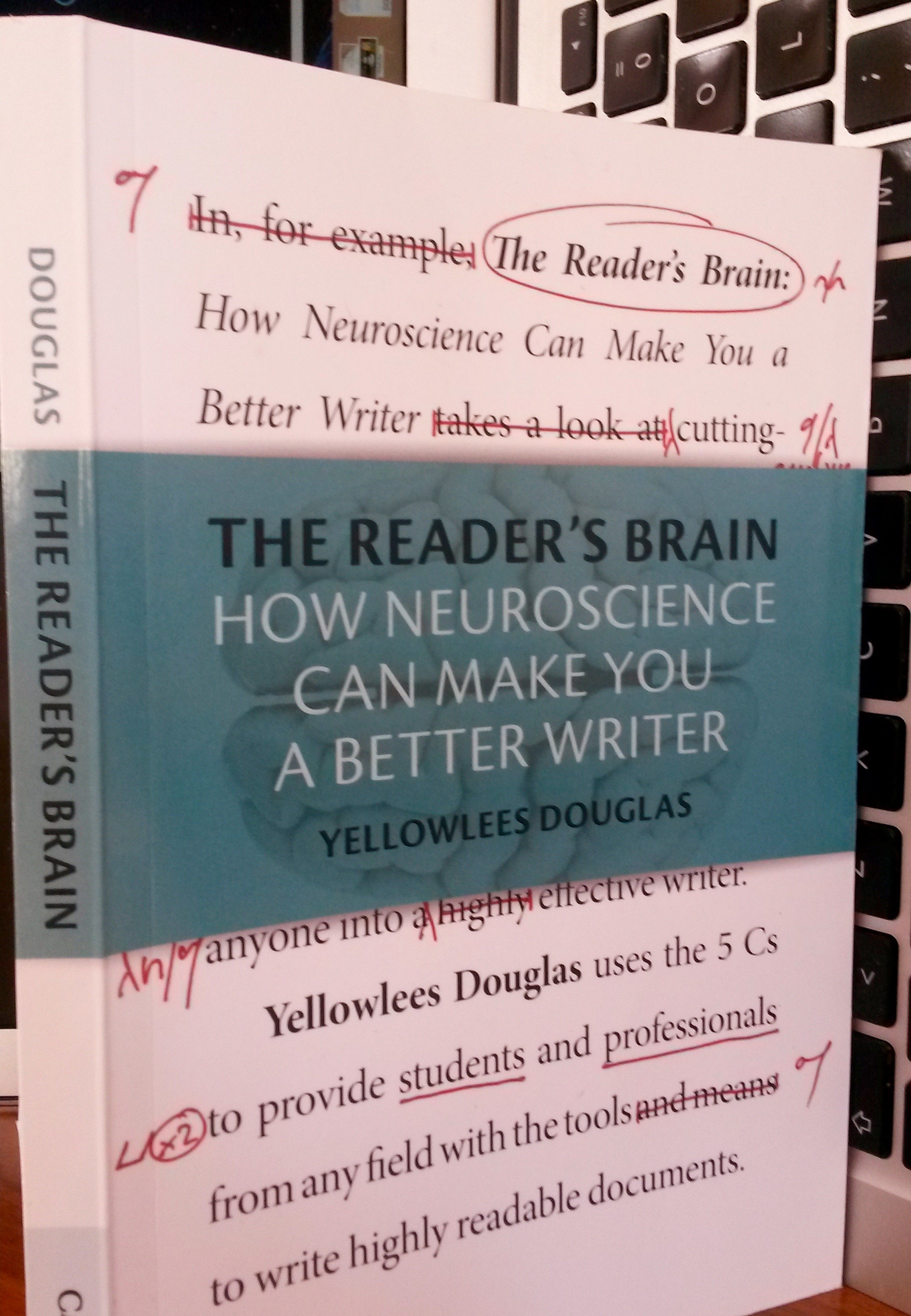 uld remember that words are tools designed to fit the system of human understanding. The reader’s brain decodes the information received, but the message received doesn’t always match what was sent. Why?
Artists inside
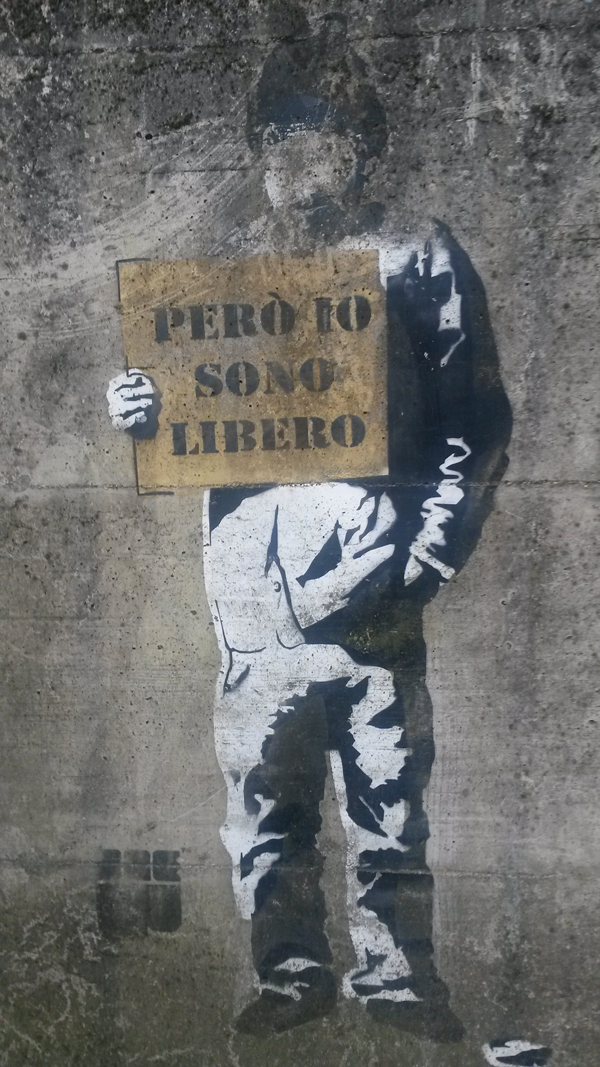
 I have to go back in time to find the first seed, which was planted by a professor of criminology. It was 1980, and the professor was Guido Galli. The seed was concerning human rights, whether people were free, charged, or convicted.
At that time I did not realize what Professor Galli wanted to say. I was too self-centered and often not attending classes, including the day they killed him in the corridors of the State University of Milan. [Read]
Leonardo
 The eclecticism of Leonardo da Vinci always strikes me. His curiosity and naturalist intelligence have made him the icon of humanism. I often encounter the works of Leonardo, ranging from the overfamous Mona Lisa all the way to the floodgates on the canals, but lately it seems like he’s giving me a pat on my shoulder in order to get my attention. [Read]
Leda, the cake designer
 I personally think that cake design is a visual art that should stand out from baking, but she thinks differently, perhaps because she is a perfectionist. For Leda Intorta, in cake design visual and tasting arts must meet and be complementary. She is young, good-looking, and capable; through videos on YouTube she is teaching many sugar paste lovers. Her courses are crowded with artists from all over Italy. [Read]
Stable of sorrow
 The shiny look on the world of western horse in a psycho-novel that involves and upsets
I watch you
 I Watch You is “a text that pushes and forces you to chase the absolute need of the last page, towards the final longed for, a shocking and absolutely extraordinary finish.” – Pino Roveredo
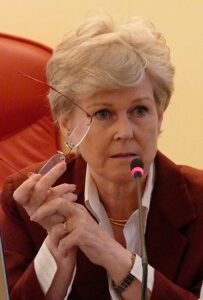
Sibyl (Esther Sibylle) von der Schulenburg was born in Lugano, Switzerland, to German writer parents. Raised bilingually and within a multicultural environment spanning Germany, Switzerland, and Italy, she developed from an early age a European and transnational vision of culture.
She completed university studies in Law at the University of Milan, an education that structurally shaped her thinking, orienting it toward issues of responsibility, norms, conflict, and guilt. She later complemented this path with studies in Psychology and Criminology, integrating the legal perspective with the analysis of psychic processes and the dynamics of deviant behavior.
After a long professional career in the telecommunications sector, where she held senior executive positions and traveled throughout Europe, the United States, Canada, and Asia, she gradually focused her activity on writing and research.
As a writer, she brings this multidisciplinary background to bear in her essays and novels. Her narrative debut came with Il Barone (Ipertesto, 2010), a historical-biographical novel resulting from meticulous archival research on her father, Werner von der Schulenburg, a German anti-Nazi intellectual and committed Europeanist. The work received broad critical acclaim and was adopted as a reference biographical source in historical studies. This was followed by a second historical novel dedicated to her ancestor Johann Matthias von der Schulenburg.
From 2013 onward, she devoted herself primarily to psychological fiction, giving rise to what critics have termed psycho-narrative: an essential form of writing, devoid of explanatory psychologism, which entrusts the representation of mental states to action, dialogue, and scene. In her novels, law, psychology, and criminology converge not as declared themes, but as the deep structure of the narrative gaze. In parallel, she publishes popular psychology essays on topics such as bilingualism, identity, and the relationship between space and psyche.
Alongside her literary activity, Sibyl von der Schulenburg has developed a concrete and ongoing commitment to social work, applying the same bodies of knowledge in practical contexts. She is the founder and president of the nonprofit association Artisti Dentro Onlus, through which she designs and implements innovative cultural projects within prisons. For her, prison becomes a privileged place for observing the human being at the point of maximum fracture between legal norms, personal identity, and psychic suffering. Through art, writing, and culture, the association’s projects aim to restore voice, responsibility, and the possibility of transformation, moving beyond assistentialist or purely re-educational models.
For this commitment—carried out consistently and recognized at the institutional level—she was awarded by the Quirinale the honor of Commendatore della Repubblica, in recognition of the civil, cultural, and human value of her work.
She lives and works in the province of Milan, with long stays in Tuscany, on the Etruscan Coast.